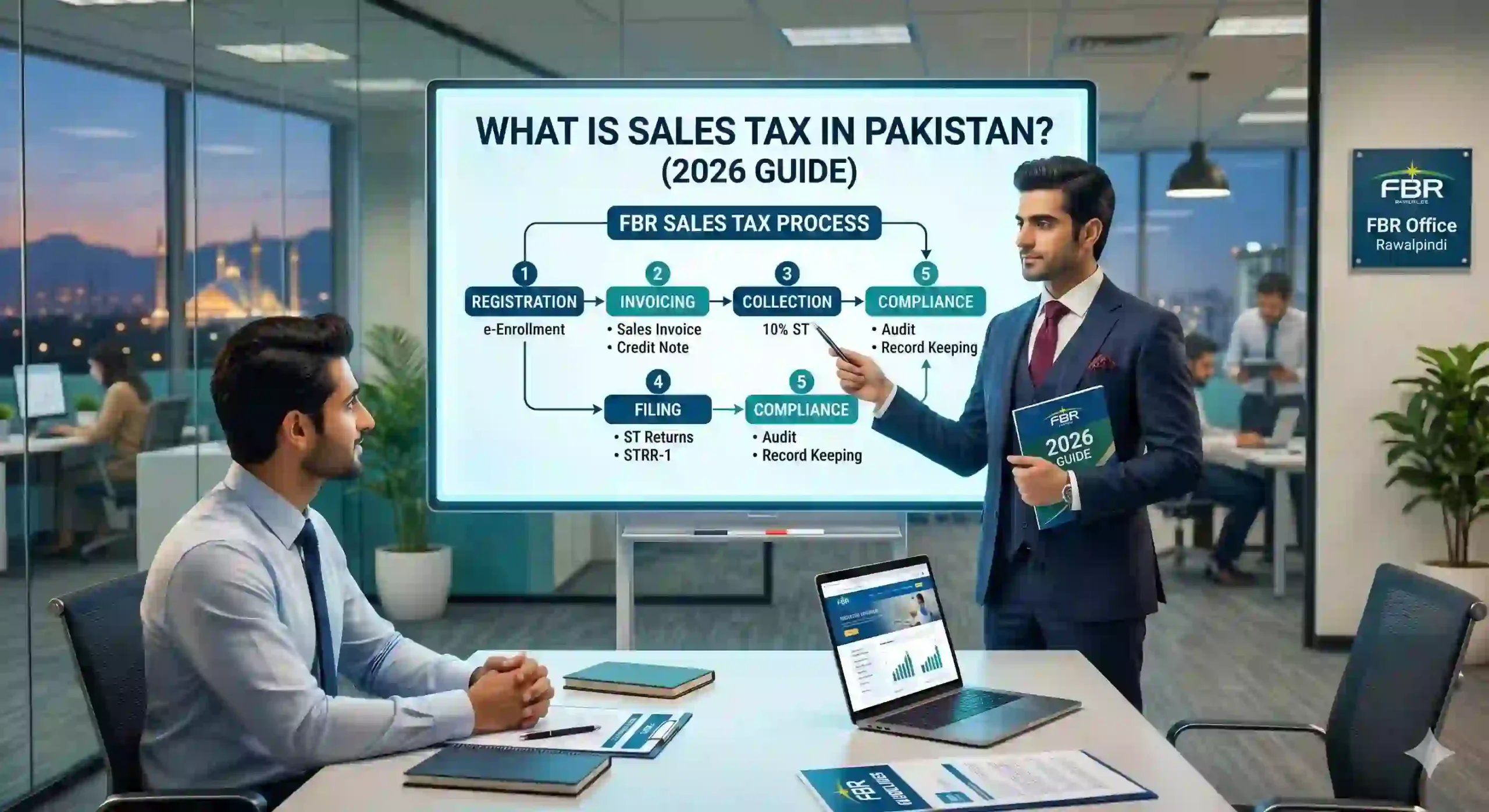
If you have ever stood at a shop counter in Pakistan and wondered why the price on the tag is slightly different from what you actually pay — sales tax is usually the answer. It is one of those invisible taxes that most people pay every single day without fully understanding how it works, who collects it, or why it even exists.
This guide breaks down everything you need to know about sales tax in Pakistan — from what it is and how FBR collects it, to registration, filing, and what happens if you do not comply. Whether you are a business owner, a student, or someone exploring a taxation course in Pakistan, this is the most complete and human-friendly explanation you will find.
What is Sales Tax in Pakistan?
Sales tax in Pakistan is an indirect tax imposed on the sale, supply, or import of goods and certain services. It is called “indirect” because the final consumer bears the burden of the tax, but businesses are responsible for collecting and depositing it with the government.
In simple terms: when a business sells you something, it adds sales tax to the price, collects that money from you, and then pays it to the Federal Board of Revenue (FBR) or the relevant provincial authority.
The primary law governing sales tax on goods at the federal level is the Sales Tax Act, 1990. This law has been amended many times, most recently through the Finance Act 2025, which introduced several important changes to rates, thresholds, and compliance requirements.
What is FBR and How Does It Relate to Sales Tax?
FBR stands for the Federal Board of Revenue — Pakistan’s apex tax authority responsible for collecting federal taxes, including sales tax on goods, customs duties, and federal excise duty.
If you run a business that manufactures, imports, or sells taxable goods, FBR is the authority you register with, file returns to, and pay your sales tax to.
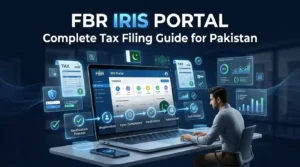
FBR operates its digital system through the IRIS portal (iris.fbr.gov.pk), which is the online platform where businesses register for sales tax, file their monthly returns, and manage their tax profile. If you are unfamiliar with how IRIS works, our detailed guide on the FBR IRIS portal in Pakistan explains everything step by step.
The Current Sales Tax Rate in Pakistan (2026)
The standard sales tax rate in Pakistan for 2025 is 18% on most taxable goods. However, different rates apply depending on the category of goods or services:
- Standard rate: 18% on most goods
- Reduced rate: 10% on certain items (e.g., specific agricultural inputs)
- Zero-rated supplies: 0% (exporter gets a refund on input tax)
- Exempt supplies: No sales tax at all (certain food items, medicines, educational books)
- Enhanced rate: Up to 25% on luxury or specific goods
Understanding which rate applies to your product or service is one of the most important parts of sales tax compliance — and it is also one of the areas covered in depth in a certified tax advisor course in Pakistan.
Who Needs to Register for Sales Tax in Pakistan?
Not every business in Pakistan needs to register for sales tax. According to the Sales Tax Act, 1990, the following persons are required to register:
- Manufacturers whose annual turnover exceeds Rs. 10 million
- Commercial importers of taxable goods
- Retailers classified as Tier-1 retailers (large retail outlets, franchises, mall-based shops with annual turnover above Rs. 150 million)
- Wholesalers and distributors of taxable goods
- Service providers where the service falls under FBR’s jurisdiction (not provincial)
Small retailers below the Tier-1 threshold generally fall under a fixed tax scheme or are exempt from formal registration, though they still pay sales tax embedded in their purchase price.
If you are unsure whether your business qualifies, consulting a tax professional or enrolling in a tax consultant course in Islamabad can save you costly mistakes later.
Federal vs. Provincial Sales Tax: What Is the Difference?
This is a question that confuses even experienced businesspeople in Pakistan.
Federal sales tax — administered by FBR — applies to goods (manufactured, imported, or sold). If your business is selling physical products, FBR is your authority.
Provincial sales tax — applies to services, and each province has its own revenue authority:
- Sindh Revenue Board (SRB) — for services in Sindh
- Punjab Revenue Authority (PRA) — for services in Punjab
- KP Revenue Authority (KPRA) — for services in Khyber Pakhtunkhwa
- Balochistan Revenue Authority (BRA) — for services in Balochistan
So if you run a restaurant, an IT company, a courier service, or a consultancy, you will likely fall under your provincial revenue authority — not FBR.
This is an important distinction because the registration process, return filing, and tax rates differ between federal and provincial systems. A full Pakistan tax return guide can help you understand which system applies to your specific situation.
What is a Sales Tax Registration Number (STRN)?
When a business registers for sales tax with FBR, it receives a unique identifier called the Sales Tax Registration Number (STRN) — sometimes also referred to as the GSTIN in older documentation.
This number:
- Identifies your business in FBR’s system
- Must appear on every tax invoice you issue
- Is linked to your NTN (National Tax Number)
- Is publicly verifiable through the Active Taxpayer List (ATL) on FBR’s website
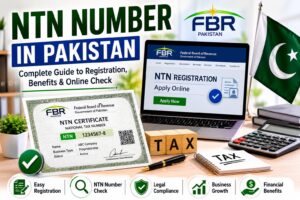
If you do not have an NTN yet, the first step is how to get an NTN number in Pakistan — registration typically takes 24–48 hours through the IRIS portal.
Understanding Input Tax and Output Tax
This is the heart of how Pakistan’s sales tax system works, and understanding it will save you from overpaying or underpaying your taxes.
Output Tax is the sales tax you collect from your customers when you sell goods. If you sold goods worth Rs. 100,000 and the sales tax rate is 18%, you collected Rs. 18,000 in output tax.
Input Tax is the sales tax you already paid when you purchased raw materials, goods, or services for your business. If you paid Rs. 10,000 in sales tax on your purchases, that is your input tax.
The amount you owe FBR = Output Tax − Input Tax
So if your output tax was Rs. 18,000 and your input tax was Rs. 10,000, you pay FBR Rs. 8,000.
This mechanism prevents “tax on tax” and is what makes Pakistan’s system a Value Added Tax (VAT)-style framework, even though it is officially called sales tax.
The input tax credit system has specific rules — not every purchase qualifies for input tax adjustment. Blocked credits, partial credits, and pro-rata calculations are areas where many businesses make errors. This is also why proper IRIS portal training is so valuable.
Zero-Rated vs. Exempt Supplies: What Is the Difference?
Many people — including accountants — confuse these two terms. Here is the clear difference:
Zero-Rated Supplies (0% tax):
- Sales tax rate is 0%
- The supplier can still claim a refund on input tax paid
- Mainly applies to exports
- Listed in the Sixth Schedule of the Sales Tax Act
Exempt Supplies:
- No sales tax is charged at all
- The supplier CANNOT claim any input tax refund
- Applies to items like basic food staples, medicines, and educational materials
- Listed in the Sixth Schedule under different provisions
The practical impact: if you are an exporter, zero-rating is very favorable because you get your input tax back. If you supply exempt goods, you lose that benefit — any sales tax you paid on your inputs is a cost you cannot recover.
This distinction matters enormously for business planning, which is why it is a core topic in every good taxation course in Islamabad.
What is a Sales Tax Invoice?
A valid sales tax invoice in Pakistan must contain specific information. Issuing an incorrect invoice — or failing to issue one at all — is an offense under the Sales Tax Act.
A compliant tax invoice must include:
- Serial number and date
- Name, address, and STRN of the seller
- Name and address of the buyer (and buyer’s STRN if the buyer is also registered)
- Description and quantity of goods
- Value of supply (excluding tax)
- Sales tax amount
- Total value (including tax)
With FBR’s push toward e-invoicing and POS (Point of Sale) integration, Tier-1 retailers are now required to use FBR-integrated POS systems that automatically generate and transmit invoice data to FBR in real time. This is part of FBR’s broader digitization strategy under the Finance Act 2025.
How to Register for Sales Tax on FBR IRIS: Step-by-Step
Registering for sales tax in Pakistan is now done entirely online through the IRIS portal. Here is the process:
Step 1: Visit iris.fbr.gov.pk and log in with your NTN credentials. If you do not have an NTN, register first.
Step 2: From your IRIS dashboard, select “Registration” and then “Sales Tax Registration.”
Step 3: Fill in your business details — business type, nature of supply, turnover, bank account information.
Step 4: Upload supporting documents:
- CNIC copy
- Business registration certificate (if applicable)
- Utility bill of business premises
- Lease agreement or ownership proof of premises
- Bank account details
Step 5: Submit the application. FBR may call for verification or additional documents.
Step 6: Upon approval, your STRN is issued and visible in your IRIS dashboard.
The entire process, if your documents are in order, typically takes 3–7 working days. For a complete walkthrough, visit our FBR IRIS login guide Pakistan.
How to File a Monthly Sales Tax Return on IRIS
Every registered sales tax filer must submit a monthly sales tax return by the 15th of the following month. For example, the return for January must be filed by February 15th.
Here is how to file:
Step 1: Log into IRIS and navigate to “Sales Tax” → “Sales Tax Return.”
Step 2: Select the relevant tax period (month and year).
Step 3: Fill in your output tax details — total sales, taxable sales, and sales tax collected.
Step 4: Fill in your input tax details — purchases, imports, and the sales tax paid.
Step 5: The system automatically calculates the net tax payable (output − input).
Step 6: Generate the PSID (Payment Slip ID) if tax is payable.
Step 7: Pay through any designated bank or online banking using the PSID.
Step 8: After payment, complete and submit the return on IRIS.
If there is no business activity for the month, you must still file a nil return to remain compliant. Missing even one month’s return triggers penalties and can move you to the inactive taxpayer list — which creates serious problems for your business.
Our guide on how to file income tax return in Pakistan covers the broader filing process if you also need to manage income tax alongside sales tax.
Sales Tax on Services vs. Goods: Key Differences
| Feature | Sales Tax on Goods (FBR) | Sales Tax on Services (Provincial) |
|---|---|---|
| Authority | Federal Board of Revenue | SRB / PRA / KPRA / BRA |
| Law | Sales Tax Act, 1990 | Provincial Finance Acts |
| Standard Rate | 18% | 13%–16% (varies by province) |
| Portal | IRIS (iris.fbr.gov.pk) | Separate provincial portals |
| Return Due Date | 15th of next month | Varies |
If your business provides both goods and services, you may be required to register with both FBR and your provincial authority — a situation that requires careful handling to avoid double taxation on inputs.
What Are the Penalties for Sales Tax Non-Compliance?
FBR takes sales tax compliance seriously, and the penalties are significant:
- Failure to register: Fine of Rs. 10,000 to Rs. 50,000, plus unpaid tax liability
- Late filing of return: Rs. 10,000 per month or 5% of tax payable (whichever is higher)
- Incorrect return: Penalty up to 100% of the tax short-paid
- Failure to issue tax invoice: Up to Rs. 25,000 per violation
- Fraud or evasion: Criminal prosecution, up to 3 years imprisonment
The FBR enforcement machine has significantly strengthened since 2023, with data-matching systems, third-party data integration, and automated notices through IRIS. Ignorance of the law is not an accepted defense.
Sales Tax Refunds: Who Can Claim and How?
If your input tax exceeds your output tax in a given period, you are entitled to a sales tax refund from FBR. This commonly applies to:
- Exporters (who supply at zero-rate and accumulate input tax)
- Manufacturers with high input purchases compared to output sales
- Businesses supplying goods to zero-rated sectors
The refund process in Pakistan has historically been slow and bureaucratic. However, FBR has introduced the FASTER refund system for exporters, promising refund processing within 72 hours for eligible claimants.
To claim a refund, you file a refund application through IRIS with supporting invoices and documentation. FBR may conduct an audit before releasing the refund.
Sales Tax on Imports in Pakistan
Importers pay sales tax at the point of entry into Pakistan — through Pakistan Customs. The customs-assessed value (CIF value + customs duty) forms the basis for calculating sales tax on imported goods.
Commercial importers who are registered for sales tax can claim the sales tax paid at import as input tax against their output tax in their monthly return. This prevents the tax from cascading through the supply chain.
Non-registered importers pay sales tax at import but cannot adjust it — making registration economically beneficial for any business importing regularly.
Sales Tax on Electricity Bills in Pakistan
One area that affects virtually every household and business is sales tax on electricity. Electricity consumed by commercial and industrial consumers is subject to general sales tax, which you can see itemized on your utility bill.
Registered businesses can, in some cases, claim input tax on electricity bills — subject to conditions. Residential consumers, however, bear the full burden with no mechanism to recover it.
Why Learn Sales Tax? The Case for a Taxation Course in Pakistan
Pakistan’s tax system is complex, frequently amended, and heavily penalty-driven. The demand for trained tax professionals has never been higher, and here is why:
- Every registered business needs someone who understands sales tax — either in-house or as an external consultant
- FBR’s enforcement is intensifying — audits, notices, and penalty recoveries are increasing year on year
- The Finance Act changes every year — keeping up requires ongoing education
- Provincial sales taxes add another layer — businesses need people who understand both systems
According to the World Bank’s Pakistan Tax Administration Report, widening the tax base and improving compliance are the two biggest fiscal priorities for Pakistan — creating enormous demand for skilled tax practitioners.
If you want to build a career in this space — or simply protect your own business — a structured taxation course is the most efficient path.
Why Choose ETTC for Taxation Training in Pakistan?
Elite Tax Training Center (ETTC) is one of Pakistan’s leading taxation institutes, offering practical, hands-on training in:
- FBR sales tax registration and return filing on IRIS
- Income tax for salaried individuals and business owners
- Withholding tax compliance
- Corporate taxation
- International taxation (UAE, UK, USA tax frameworks)
ETTC’s courses are designed by practitioners — people who work with FBR’s systems daily, not just theorists. The training covers how to file returns on IRIS, how to handle FBR notices, how to calculate input/output tax correctly, and how to stay audit-ready.
Whether you are in Islamabad, Rawalpindi, Karachi, or Lahore, ETTC offers both in-person and online formats. You can explore the full course lineup at ETTC’s official course page.
For those interested in international opportunities, ETTC also offers a UAE tax course, UK taxation course, and USA tax course — all taught in the context of Pakistani professionals working or planning to work abroad.
Career Scope After Learning Sales Tax and Taxation in Pakistan
Taxation knowledge opens doors across multiple sectors:
- Tax consultant / advisor (self-employed or with a firm)
- Corporate tax manager (in-house at any registered company)
- FBR compliance officer
- Accounts and finance roles in manufacturing, trading, or services
- Customs agent (for import/export focused careers)
- Freelance tax filer serving small and medium businesses
Use our income tax calculator Pakistan 2026 to understand income tax structures as you explore these career paths, and check income tax slabs for salaried persons in Pakistan to see how the overall tax system connects.
FAQs:
What is sales tax in Pakistan? Sales tax in Pakistan is an indirect federal tax on the sale, supply, or import of goods, governed by the Sales Tax Act, 1990, and collected by FBR. The standard rate in 2025 is 18%.
What is the current sales tax rate in Pakistan 2025? The standard sales tax rate is 18%. Reduced rates (10%), zero-rated (0%), and exempt categories also exist depending on the nature of goods.
Who needs to register for sales tax in Pakistan? Manufacturers with turnover above Rs. 10 million, all commercial importers, Tier-1 retailers, and wholesalers of taxable goods must register with FBR for sales tax.
What is the difference between zero-rated and exempt in sales tax Pakistan? Zero-rated means 0% tax applies but the supplier can claim input tax refunds (mainly exports). Exempt means no tax is charged and no input tax can be recovered.
What is input tax and output tax in Pakistan? Output tax is sales tax collected from customers on sales. Input tax is sales tax paid on purchases. The difference is paid to FBR. This is the VAT-style mechanism under Pakistan’s sales tax system.
What is the penalty for late filing of sales tax return in Pakistan? The penalty is Rs. 10,000 per month or 5% of tax payable — whichever is higher — for late or non-filing of the monthly sales tax return.
What is STRN in Pakistan? STRN (Sales Tax Registration Number) is the unique identifier issued by FBR to registered sales tax filers. It must appear on all tax invoices.
How do I file a nil sales tax return on FBR IRIS? Log into IRIS, go to Sales Tax Return, select the relevant month, enter zero in all fields, and submit. This must be done by the 15th even if there is no business activity.
Is sales tax on services federal or provincial in Pakistan? Sales tax on services is provincial in Pakistan. SRB handles Sindh, PRA handles Punjab, KPRA handles KPK, and BRA handles Balochistan.
Conclusion: Master Sales Tax — Protect Your Business, Build Your Career
Sales tax in Pakistan is not as complicated as it sounds once you understand the basic framework — who registers, what gets taxed, how input and output tax work, and what FBR expects from you every month.
But the devil, as always, is in the details. The Finance Act changes rates and rules. FBR adds new compliance requirements. Audits happen. Notices arrive. And the cost of getting it wrong — financially and legally — is simply too high to ignore.
The smartest investment you can make right now — whether you are a business owner trying to stay compliant or a professional trying to grow your career — is proper taxation training.
Book your seat in the Advance Taxation Course at Elite Tax Training Center (ETTC) — Pakistan’s most practical, hands-on tax training institute. Our expert mentors, real IRIS-based training, and comprehensive curriculum will take you from beginner to confident tax practitioner.
👉 Explore All Taxation Courses at ETTC | Apply Now | Contact ETTC Islamabad