Let’s be honest — most people in Pakistan hear the word “taxation” and immediately think of complicated paperwork, confusing FBR portals, and never-ending deadlines. But here’s what they’re missing: taxation is one of the most powerful, practical, and in-demand skills in Pakistan right now.
Whether you are a fresh graduate looking for your first job, a business owner trying to save money legally, a salaried employee confused about your tax deductions, or a professional looking to upgrade your career — learning taxation can genuinely transform your financial future.
Pakistan’s tax landscape is evolving fast. The Federal Board of Revenue (FBR) has digitized its entire system through the IRIS 3.0 portal. The Finance Act 2025 brought new income tax slabs, updated withholding tax rates, and stricter compliance requirements. In this environment, qualified tax professionals are not just in demand — they are essential.
In this article, we break down the Top 10 Benefits of Learning Taxation in Pakistan, covering everything from career opportunities and salary growth to business savings and financial independence. By the end, you will understand exactly why taxation education is one of the smartest investments you can make in 2025–2026.
What Is Taxation and Why Does It Matter in Pakistan?
Taxation is the system through which governments collect revenue from individuals and businesses to fund public services — roads, hospitals, education, and defense. In Pakistan, the Federal Board of Revenue (FBR) is the primary authority responsible for tax collection and enforcement.
Pakistan operates on two main tax systems:
- Direct Taxes — Income tax, corporate tax, capital gains tax, and super tax. These are paid directly to the government by the taxpayer.
- Indirect Taxes — Sales tax, customs duty, and Federal Excise Duty (FED). These are collected at the point of sale or import.
The country’s tax laws are governed primarily by the Income Tax Ordinance 2001 and the Sales Tax Act 1990, both of which are updated annually through the Finance Act.
Despite these frameworks, Pakistan faces a serious challenge: a very narrow tax base. Only a small percentage of the population actively files income tax returns. This creates both a national problem and a personal opportunity. If you understand taxation while most people don’t, you hold a significant competitive advantage — whether in the job market, in business, or in managing your own finances.
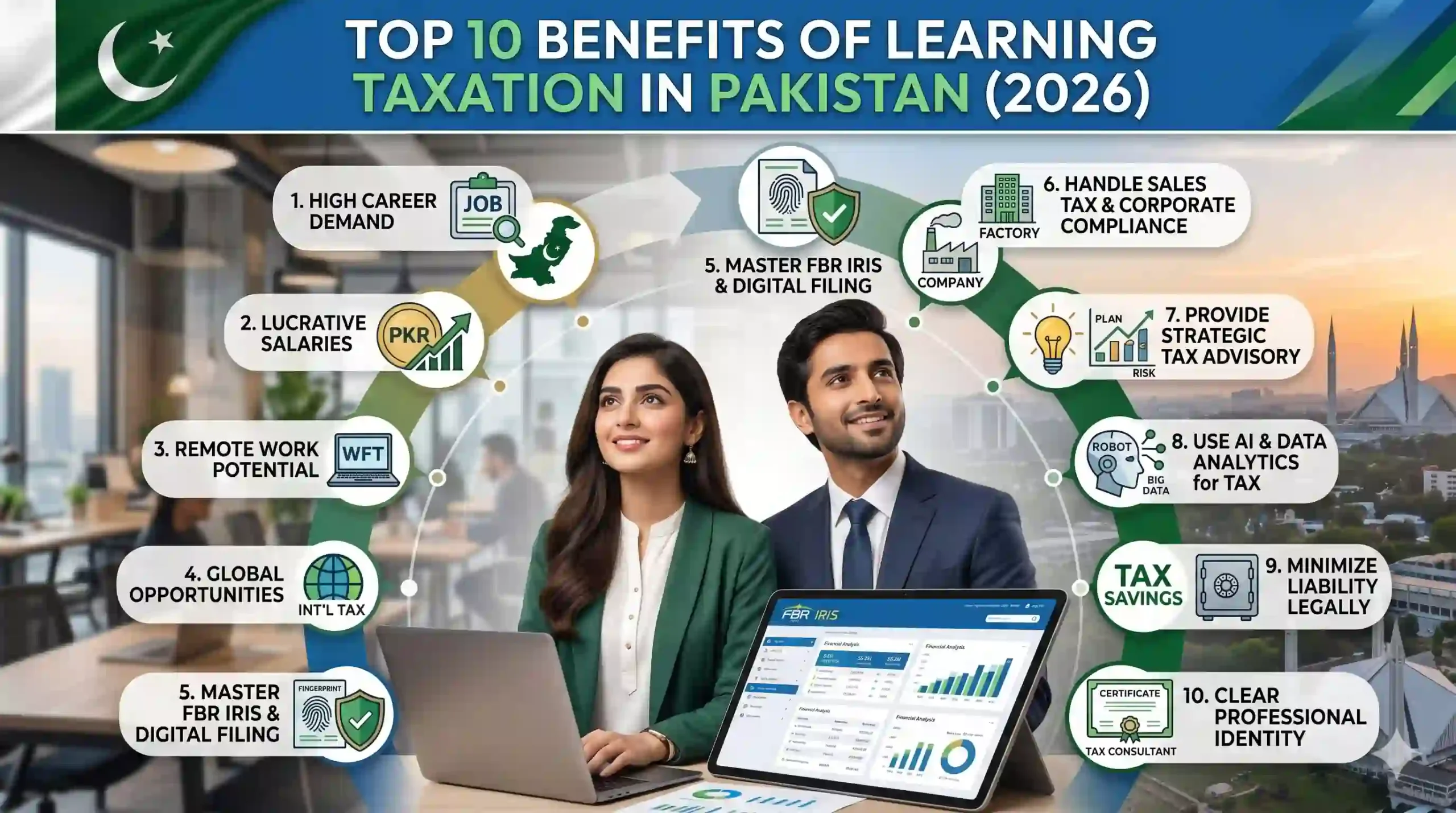
Top 10 Benefits of Learning Taxation in Pakistan
Benefit 1: High-Demand Career Opportunities in Pakistan’s Growing Tax Sector
One of the biggest benefits of learning taxation in Pakistan is the massive and growing demand for qualified tax professionals.
Every registered business in Pakistan is legally required to file tax returns, maintain compliance with FBR regulations, deal with withholding tax obligations, and handle sales tax under the jurisdiction of the Sindh Revenue Board (SRB), KPK Revenue Authority (KPRA), or Punjab Revenue Authority (PRA). This means companies across every industry — manufacturing, retail, real estate, IT, banking — need people who understand tax.
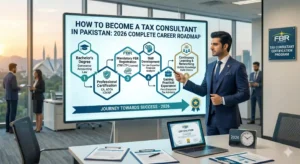
Demand is especially high in cities like Karachi, Lahore, Islamabad, and Rawalpindi, where commercial activity is concentrated. If you search for taxation-related jobs on LinkedIn or Rozee.pk today, you will find hundreds of active listings for roles like Tax Analyst, Tax Manager, Assistant Tax Commissioner, Tax Consultant, and FBR Compliance Officer.
For those looking to take the first practical step, the Tax Consultant Course in Islamabad offered by ETTC gives you a direct pathway into this high-demand field with practical, job-ready training.
Benefit 2: Excellent Earning Potential — Tax Consultants Earn Premium Salaries
Ask any HR professional in Pakistan: tax knowledge commands a salary premium. Professionals with practical taxation skills typically earn 20–35% more than their counterparts who lack this specialization.
Here is a realistic salary breakdown for tax professionals in Pakistan in 2025–2026:
- Entry-Level Tax Officer / Tax Analyst — PKR 60,000 to PKR 100,000/month
- Tax Consultant (2–4 years experience) — PKR 100,000 to PKR 200,000/month
- Senior Tax Manager — PKR 200,000 to PKR 400,000/month
- Independent Tax Consultant (own clients) — PKR 300,000 to PKR 1,000,000+/month
And if you build your own consultancy practice, your earning potential becomes virtually unlimited. Many experienced tax consultants in Karachi, Lahore, and Islamabad run their own firms handling hundreds of corporate clients — generating significant monthly income.
The FBR’s digital transformation has also created demand for professionals who understand the IRIS 3.0 Portal, e-filing systems, and digital compliance tools. Digitally-skilled tax professionals now command an additional premium in the market.
Benefit 3: Start Your Own Tax Consultancy — Be Your Own Boss
Learning taxation gives you everything you need to run an independent business. Pakistan has over 6 million registered businesses, and the vast majority need professional help with:
- Filing income tax returns annually
- Managing monthly sales tax returns
- Handling withholding tax statements
- Dealing with FBR notices and tax audits
- Getting registered on the Active Taxpayer List (ATL)
- Obtaining NTN (National Tax Number) for new businesses
If you complete a professional taxation course, you can legally offer these services and charge per client or on a retainer basis. Starting a tax consultancy requires minimal capital — just knowledge, a laptop, and an internet connection to access the FBR IRIS Portal.
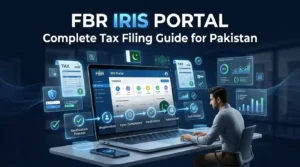
Want to understand how the IRIS portal works before you start? Read our detailed guide on the FBR IRIS Portal in Pakistan to get a solid foundation before you begin serving clients.
Benefit 4: Save Your Business Thousands of Rupees Through Smart Tax Planning
If you own a business in Pakistan — no matter how small — taxation knowledge can directly save you money. Many business owners pay more tax than legally required simply because they are unaware of available deductions, exemptions, and tax planning strategies.
Under Pakistani tax law, businesses can legitimately reduce their taxable income through:
- Depreciation on assets
- Deductible business expenses
- Employee provident fund contributions
- Tax credits under the Income Tax Ordinance 2001
- Advance tax adjustments
- Loss carry-forward provisions
Without this knowledge, you may be leaving hundreds of thousands of rupees on the table every tax year. With it, you become the smartest person in the room when tax season arrives.
Our Business Tax Calculator can help you estimate your current tax liability and identify where savings are possible.
Benefit 5: Become Fully FBR Compliant — Protect Yourself Legally
In Pakistan today, the difference between being a filer and a non-filer is enormous. Non-filers face:
- Higher withholding tax rates on property purchases and sales
- Restrictions on buying vehicles above certain values
- Higher tax deductions on bank transactions
- Inability to bid on government contracts
- Risk of FBR notices and penalties
Learning taxation helps you understand exactly how to register as an active taxpayer, file your annual income tax return correctly, and appear on the Active Taxpayer List (ATL) — which is updated regularly by FBR.
This is not just about saving money. It is about legal protection. Understanding your rights and obligations under the Income Tax Ordinance 2001 means you cannot be misled, overcharged, or unfairly penalized.
For a step-by-step walkthrough, check our guide on How to Become an Active Tax Filer in Pakistan and How to Get an NTN Number in Pakistan.
Benefit 6: Massive Career Boost for Accountants, Finance Professionals & Fresh Graduates
If you are already working in finance, accounting, or a related field, adding taxation to your skillset can accelerate your career dramatically.
Many CA (Chartered Accountant) students, ACCA professionals, and ICMA Pakistan members find that practical taxation training fills a critical gap left by their theoretical education. Book knowledge of tax law is one thing — actually knowing how to file returns on FBR IRIS, handle a withholding tax audit, or structure a corporate tax plan is another.
For fresh graduates in cities like Lahore, Islamabad, Karachi, Peshawar, Faisalabad, and Multan, completing a taxation certification course gives you a major edge over other job seekers. Employers specifically look for candidates who already understand the FBR system, practical tax filing, and compliance requirements — because training from scratch is expensive and time-consuming.
The Certified Tax Advisor Course in Pakistan at ETTC is specifically designed for both fresh graduates and working professionals who want to rapidly build this practical expertise.
Benefit 7: Understand Salary Tax Slabs and Keep More of Your Own Money
Here is a benefit that affects every single salaried person in Pakistan: if you understand income tax, you can legally reduce your own tax liability.
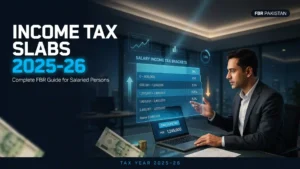
The Salary Tax Slabs for 2025–2026 under the Finance Act 2025 are:
- Annual income up to PKR 600,000 — Zero tax (tax-free threshold)
- PKR 600,001 to PKR 1,200,000 — 5% of the amount exceeding PKR 600,000
- PKR 1,200,001 to PKR 2,400,000 — PKR 30,000 + 15% of the amount exceeding PKR 1,200,000
- PKR 2,400,001 to PKR 3,600,000 — PKR 210,000 + 25% of the amount exceeding PKR 2,400,000
- PKR 3,600,001 to PKR 6,000,000 — PKR 510,000 + 30% of the amount exceeding PKR 3,600,000
- Above PKR 6,000,000 — PKR 1,230,000 + 35% of the amount exceeding PKR 6,000,000
Most salaried employees simply accept whatever tax their employer deducts under Section 149 of the Income Tax Ordinance. But many do not realize they can claim tax credits for investments in pension funds, life insurance, and other instruments — legally reducing their annual tax liability.
Use our Income Tax Calculator Pakistan 2026 to calculate exactly what you owe and where you can save.
Benefit 8: Expand Into International Taxation — UAE, UK, and USA Tax Opportunities
One of the most exciting developments in Pakistan’s tax education landscape is the growing demand for international taxation skills.
Thousands of Pakistani freelancers, consultants, businesses, and overseas professionals now need guidance on:
- UAE Tax — VAT compliance, corporate tax (introduced in 2023 at 9%)
- UK Taxation — Self-assessment, PAYE, VAT for Pakistani expats and businesses
- USA Taxation — Federal income tax, 1099 reporting, W-8BEN forms for freelancers
ETTC is one of the very few institutions in Pakistan that offers dedicated courses on international taxation. Whether you want to serve Pakistani clients operating in the Gulf, advise freelancers dealing with international platforms, or build a career serving the Pakistani diaspora abroad — international tax knowledge is a game-changer.
Explore the UAE Tax Course in Pakistan, UK Taxation Course in Pakistan, and USA Tax Course in Pakistan to see how you can position yourself in this growing niche.
Benefit 9: Build Financial Literacy That Protects You for Life
Beyond the career benefits, learning taxation makes you financially literate in ways that most people in Pakistan simply are not.
When you understand how taxes work, you begin to think differently about every financial decision:
- Should you register your business as a sole proprietorship, partnership, or private limited company? Tax implications matter.
- Should you invest in real estate or stocks? Capital gains tax treatment differs significantly.
- Should you structure your salary with allowances or as basic pay? The tax impact can be substantial.
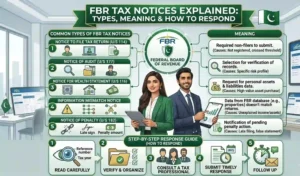
- How do you read an FBR notice without panicking — or paying something you do not owe?
This kind of financial literacy is not taught in most schools or universities in Pakistan. It is knowledge that only comes from focused tax education — and it protects you and your family for your entire life.
According to the World Bank, countries with higher levels of financial and tax literacy see significantly better voluntary tax compliance, stronger small business survival rates, and more equitable income distribution. Pakistan is actively working to improve these metrics, and educated taxpayers are a critical part of that solution.
Benefit 10: Future-Proof Your Career in Pakistan’s Digital Tax Era
Pakistan’s tax system is going through a historic transformation. The FBR’s IRIS 3.0 system is now the mandatory platform for all tax filing, payment processing, and communication with the revenue authority. The government’s push for a digital, transparent, and broadened tax base is accelerating — not slowing down.
This means the old ways of doing taxes — manual forms, physical submissions, informal arrangements — are disappearing. What replaces them is a sophisticated digital ecosystem that requires professionals who are trained, certified, and up-to-date.
Tax professionals who adapt to this digital environment will thrive. Those who do not will find themselves left behind. The skills you build through a quality taxation course today — FBR IRIS navigation, e-filing, digital compliance, real-time withholding management — are precisely the skills that will be valued most in the next five to ten years.
For a deeper dive into navigating the current digital tax environment, read our FBR IRIS 2.0 Survival Guide for Tax Season and our complete guide on How to File an Income Tax Return in Pakistan.
Why Choose ETTC — Elite Tax Training Center?
If you are serious about building a taxation career or upgrading your existing skills, choosing the right institute matters enormously.
Elite Tax Training Center (ETTC) has established itself as one of Pakistan’s leading tax education providers, offering practical, industry-aligned courses taught by experienced tax professionals — not just academics.
Here is what makes ETTC stand out:
- Practical, Hands-On Training — You actually work on the FBR IRIS portal, prepare real tax returns, and handle real-world case studies
- Expert Instructors — Faculty includes working tax consultants, former FBR officials, and certified tax advisors with decades of field experience
- Up-to-Date Curriculum — All courses are updated with the latest Finance Act provisions, FBR notifications, and Income Tax Ordinance amendments
- Multiple Course Levels — From beginner-friendly fundamentals to advanced corporate taxation and international tax
- Flexible Learning — Online and in-person options available for students in Islamabad, Rawalpindi, and across Pakistan
- Career Support — ETTC connects graduates with job opportunities, internships, and client networks
Whether you want to become a certified tax advisor, start your own consultancy, or simply understand your own taxes better — ETTC has a course designed for your exact goal.
Explore All Courses at ETTC | About Elite Tax Training Center | Meet Our Expert Mentors
Location-Specific Tax Training Opportunities in Pakistan
Taxation education is now accessible across Pakistan — not just in major cities.
Islamabad & Rawalpindi: ETTC’s primary campus is based in Islamabad, making it the top choice for students in the twin cities. The Tax Consultant Course in Islamabad and the Certified Tax Advisor Course Islamabad are flagship programs with strong job placement outcomes.
Karachi: Pakistan’s commercial capital has the highest demand for tax professionals. Institutions like the Pakistan Institute of Management (PIM) and IBA Karachi CEE offer taxation diplomas, while ETTC’s online courses reach Karachi students effectively.
Lahore: The University of Punjab and University of Lahore offer degree-level accounting and taxation programs, while professional short courses are available through various institutes including ETTC’s online platform.
Other Cities: Whether you are in Peshawar, Faisalabad, Multan, Sialkot, Quetta, Gujranwala, or Hyderabad — ETTC’s online taxation courses mean geography is no longer a barrier to getting world-class tax education.
Frequently Asked Questions (FAQs)
What are the benefits of learning taxation in Pakistan?
Learning taxation in Pakistan opens doors to high-paying career opportunities, enables you to start your own tax consultancy, helps you save money on legal tax deductions, and ensures full FBR compliance. It gives you financial literacy that protects your money and business for life.
Is taxation a good career in Pakistan in 2025–2026?
Yes, absolutely. With Pakistan’s FBR expanding its digital tax infrastructure and the government pushing for broader tax compliance, demand for qualified tax professionals is growing rapidly. Salaries for tax consultants and managers range from PKR 60,000 to over PKR 400,000 per month, with independent consultants earning significantly more.
How long does a taxation course take in Pakistan?
Most professional taxation courses in Pakistan range from 1 to 6 months depending on the level. Short certification programs can be completed in 4–8 weeks, while comprehensive diploma programs may take 3–6 months. ETTC offers flexible timelines to suit both full-time students and working professionals.
Can a fresh graduate do a taxation course in Pakistan?
Yes. No prior tax experience is required to enroll in most taxation courses in Pakistan. ETTC’s beginner-friendly courses start from the absolute basics and build up to advanced topics. Fresh graduates from any educational background — commerce, science, arts — can enroll and succeed.
What is the FBR IRIS portal and why is it important?
The FBR IRIS portal is Pakistan’s official online platform for all tax-related activities — filing income tax returns, registering for NTN, submitting withholding tax statements, making tax payments, and communicating with FBR. IRIS 3.0 is now mandatory for all tax filers in Pakistan. Every tax professional must be fully proficient in it. Read our complete guide: What is FBR IRIS Portal?
What is the difference between a tax filer and a non-filer in Pakistan?
A tax filer is someone who has filed their annual income tax return and appears on FBR’s Active Taxpayer List (ATL). A non-filer has not filed and faces higher withholding tax rates on property transactions, vehicle purchases, banking transactions, and contracts. The financial difference between filer and non-filer status can be worth tens of thousands of rupees annually. Learn more: How to Become an Active Tax Filer in Pakistan.
What is the minimum taxable income in Pakistan for 2025–2026?
For salaried individuals, income up to PKR 600,000 annually (PKR 50,000 per month) is exempt from income tax. Any income above this threshold is taxed progressively according to the salary tax slabs notified under the Finance Act 2025. Check the detailed breakdown: Income Tax Slabs Pakistan Salaried Person.
Which is the best taxation institute in Pakistan?
Elite Tax Training Center (ETTC) is widely recognized as one of Pakistan’s top-rated tax training institutes, offering practical, FBR-aligned courses taught by experienced professionals. Other reputable institutions include IBA Karachi CEE, Pakistan Institute of Management (PIM), COMSATS University Islamabad, and the University of Punjab Lahore. For professional short courses with career outcomes, ETTC is the top recommendation.
Conclusion
Taxation is not just a subject — it is a superpower in Pakistan’s economic landscape. Whether you want a high-paying job, a thriving consultancy, a legally compliant business, or simply the confidence to handle your own tax affairs, the benefits of learning taxation in Pakistan are real, measurable, and life-changing.
From understanding the Income Tax Ordinance 2001 and the Sales Tax Act 1990, to navigating the FBR IRIS Portal, preparing tax returns, handling audits, and advising clients — every piece of taxation knowledge you gain adds direct value to your professional and financial life.
Pakistan’s tax system is evolving rapidly. The window of opportunity for well-trained tax professionals has never been wider. The only question is whether you will be ready to take advantage of it.
Ready to take the next step?
👉 Book Your Seat in the Advanced Taxation Course at Elite Tax Training Center (ETTC) — Pakistan’s leading tax training institute with practical, job-ready programs for all levels.
👉 Explore All Taxation Courses at ETTC | Contact ETTC Islamabad
Start your taxation journey today. Your financial future will thank you.